Do you ever complete cleaning your house and deodorising it with that so-called clean smell and feel absolutely sure that there is no single germ visible? It is a comforting sensation; however, real disinfection is not merely spraying a surface and wiping it. Although cleaning is a routine exercise for many individuals, the disinfection process cannot be effectively done without the right disinfectants, the appropriate time and the appropriate methods.
A single error may decrease the efficiency of the work that you have done and leave bacteria and viruses hanging around. In order to make sure that your place of living is truly hygienic, you should be aware of what may be wrong. These are ten typical disinfection errors that you might be committing – and how to eliminate them.
1. Washing with a Cleaner and Not a Disinfectant
The crux of the matter is that of the numerous myths in expert cleaning of homes is that all cleaning products kill germs. Indeed, the majority of multipurpose cleaners do not remove dirt, grease, and stains, which is its intended use. They may not eliminate harmful bacteria or viruses even though they render surfaces clean. Specially designed are the disinfectants that kill the microorganisms. It is always important always read the labels in the products to be sure that the product is known to disinfect and not just clean.
2. Leaving Cleaning Step out First
Cleaning something and not properly washing it is also similar to painting on a dirty wall. There is the possibility of food residue, dirt and grease forming a barrier between disinfectants and germs. Preferably cleaners with soap or the right disinfectant should be used, and one should always clean the surfaces with soap first before applying the disinfectant. The two measures that will be made in this process imply that the disinfectant will freely access the bacteria and viruses.
3. Failing to Provide Sufficient Time for Contact
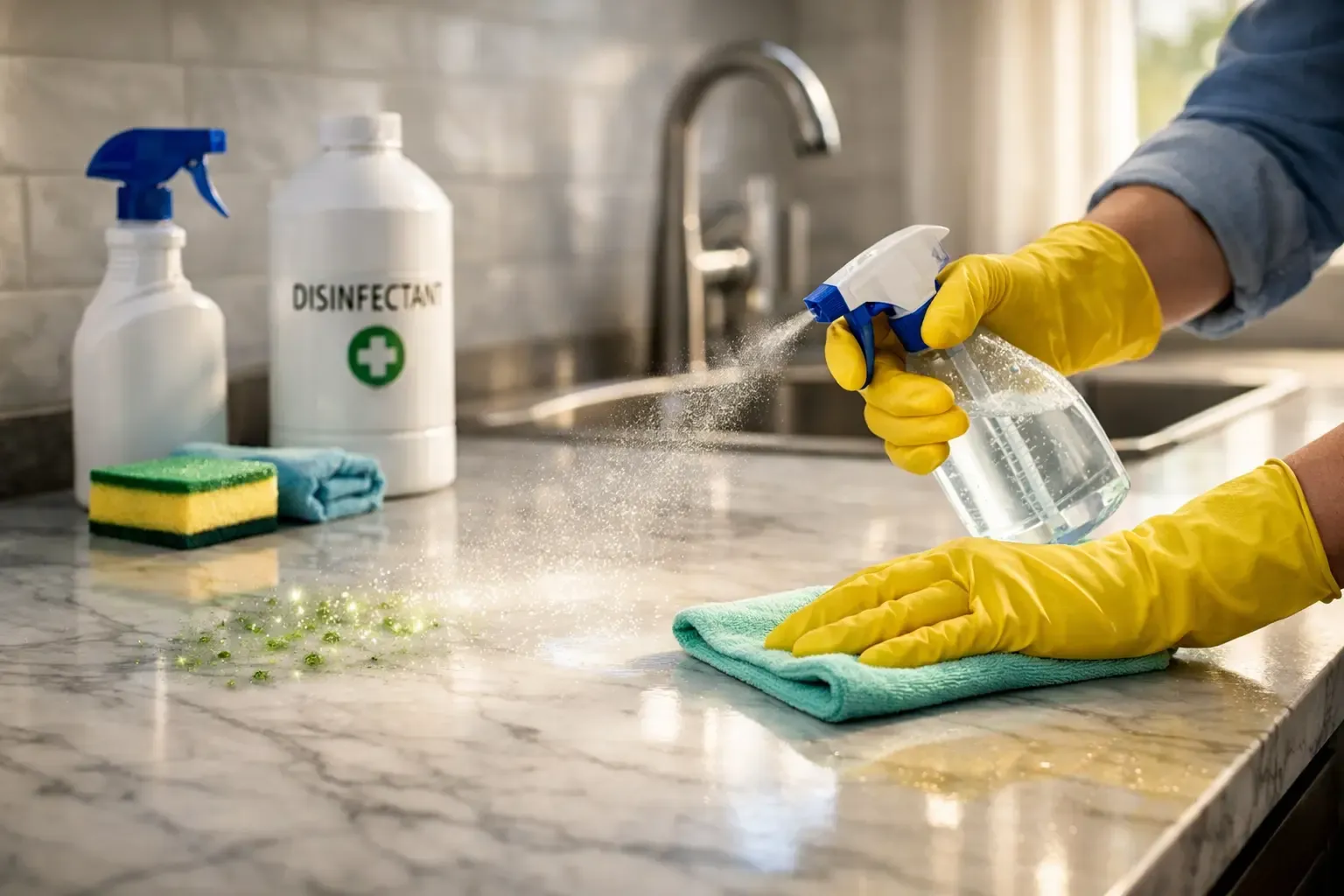
Most individual sprays disinfectant and then wipe it off. However, this is a bad habit that diminishes its performance remarkably. Each of the disinfectants has a certain amount of contact time, that is, the time during which the surface should not be dry to be able to kill germs. This may take 30 seconds to 10 minutes, depending on the product. When the surface dries too fast, there are chances that the germs can survive. A tip would be to always read the instructions and leave the solution to soak within the required time.
4. Applying Too Little Product
A brief spray may appear adequate, but if the surface is not wet, the real situation may not be disinfected. The disinfectants should reach the surface all over and be wet throughout the time of contact. Using less will lead to insufficient elimination of germs. You should also apply enough product to the area, but not to saturate it.
5. Excessive Use of Disinfectant Products
Although excessive use can be problematic, at the same time, excessive use of it is not effective. Excess will result in sticky residues, destruction of some materials, and expose individuals to harsh chemicals. It also has the capacity to invite indoor air pollution. Adhering to the instructions of the manufacturer will help you to disinfect enough, but not too much.
6. Disregarding High-Touch Surfaces
One can easily pay attention to big and conspicuous spaces, such as floors and countertops, leaving behind minor high-touch points. The handles on doors, switches, knobs on the cabinets, remote controllers, keyboards, and mobile phones are handled regularly during the day. Such regions tend to be the breeding ground of the greatest number of germs. Washing these areas with disinfectants is quite useful in order to reduce disease transmission in your house. Some of these frequently used areas may also trap unpleasant odours over time, so it may be useful to learn simple ways to remove sulphur smells from your house.
7. Mixing Cleaning Chemicals
The mixing of cleaning products may not seem a great risk especially in the effort to develop a more effective solution, but that can be highly hazardous. Other combinations of chemicals such as bleach and ammonia emit poisonous gases which can be irritating to the respiratory system or be a critical health risk. Besides, there is a risk of reduced efficiency of products combined in one. It should only be applied to a single disinfectant at a time and should not also be mixed unless the manufacturer is specific.
8. Washing of Dirty Clothes and Sponges
In the process of wiping down the surfaces, when using a cloth or a sponge that could not be cleaned properly, you could be spreading bacteria instead of destroying them. Cleaning of utensils can be infested with germs in a very short time. The microfiber cloths should be washed in accordance to a regular routine and the sponges too have to be changed regularly. Clean and sanitised tools should be used to wash the tools so that you do not go against your disinfecting behaviour.
9. Failure to Take Care of the Cleaning Equipment
Even professional cleaning tools can be polluted in future. Bacteria is often picked up during the usage of the mops, buckets, vacuum filters and the reusable gloves. They can cause the transmission of germs next time you clean them, without being washed and disinfected. It is an habit to make sure that you rinse, wash and disinfect your equipment on a regular basis to maintain the overall level of hygiene.
Conclusion
The issue of disinfection is not merely about making appearances clean, but about actually sanitising. These are just some of the errors that will hold you down, whether you miss the time spent on contact or not have the time to cleanse high-touch surfaces. Knowing what not to do when disinfecting things, you might be able to make your surrounding environment safer and healthier. Taking into consideration the correct usage of products and schedule, your disinfection will be even more productive as you will be able to enjoy the actual peace of mind every time you wash things.