Did you go into your house and sniff in, and then you have a feeling, Oh, why does it stink of rotten eggs in here? Yes, and you have already encountered the smell of sulphur, as all house-owners detest. This smell is not nice, and it makes one embarrassed when guests come, and even worries in some situations. The positive thing is that the smell can be traced, treated and prevented using the appropriate measures.
The odour of sulphur is normally caused by sulphide gas, plumbing problems, contaminated water, gas leakages and bacteria trapped. The real irony is that rather than panicking and trying to cover it up with air fresheners, it is more important to figure out the cause. Once the cause is evident, the solution will be far easier. We shall proceed to the realistic, easy, and efficient methods of getting rid of the sulphur smell in your house, room after room, and source after source.
1. Determine the Source of the Smell
The primary measure is to determine the point where the sulphur odour is emanating, as per professional teams, a step bond cleaners follow before any corrective action. Indicatively, take a minute to confirm whether it is coming out of the water, drains, gas appliances or the particular rooms. Ensure you run cold and hot water in separate taps, move around sinks, bathrooms, and basements, and you realise that the smell is much more intense in some places. To let the odour be known as either indoors or outdoors, a few minutes out of the house might help confirm this. In case the smell is only detected when water is in motion, then the issue is probably related to your water supply or water heater. When it is the strongest in the areas around drains, then the cause is likely to be extrajudicial in nature.
2. Examine Gas Leaks
In case of a foul smell of sulphur which is extensive, then one should think of there being a leakage of gas. To be able to sense when there is a leak in a short time, natural gas companies strategically introduce a rotten-egg smell. In case of such a suspicion, do not turn any lights on or turn any appliances on, do not light a match, do not use the cell phone inside the house, open all doors and windows and air the house out, move out of the house and call up your gas provider or the police emergency number who will pick you up at a safe place outside. Any attempt to fix a gas leak should be very risky.
3. In Case the Smell is Caused by Tap Water
Hydrogen sulphide gas is normally the cause of the smell when the odour is associated with water. This may be occasioned by minerals within the water, or the condition of well water, or bacteria within pipes or heaters. Start the water and run it for several minutes to see whether the smell is gone, and then see whether or not the odour is only noticeable in hot water. Since the smell could be limited to hot water, the possible cause could be a faulty water heater. This may be resolved in many ways, viz., flushing tank, disinfection, or replacement of anode rod. Well water homes can be professionally tested, or treated with chlorination, or provided with filtration and aeration. Activated carbon filters, which are a long-term solution,s can be used to ensure water quality is improved significantly in areas where sulphur naturally occurs.
4. Clean and Disinfect Drains Deep
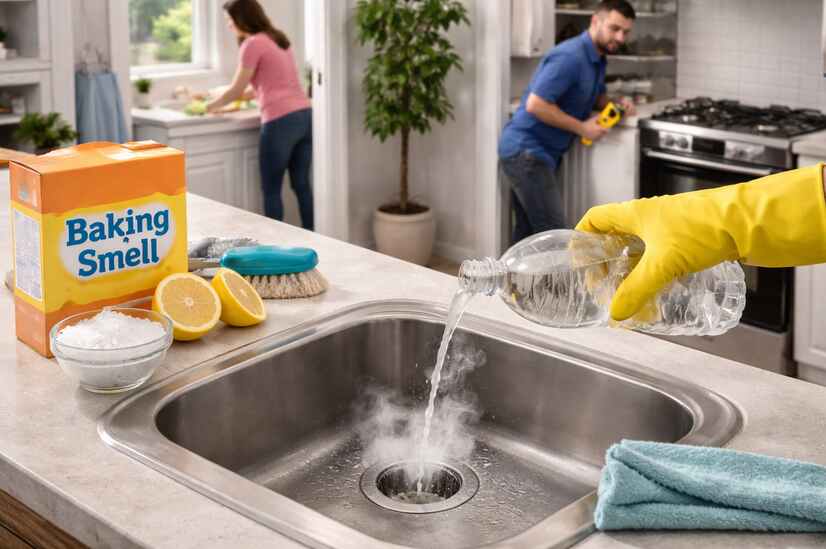
Use of food debris, buildup of soaps, grease, and bacteria are the causes of sulphur-like odours in the kitchen and bathroom drains. Boiling water added to the drain will loosen the dirt, and a solution of baking soda and vinegar will dissolve organic substances and eliminate bacteria which cause the odour. On repeated occasions of the smell, enzyme drain cleaners or professional plumbing may be required, especially when a large amount has been accumulated in the pipes.
5. Treat Taps, Garbage Disposals and Sinks
Soil and grease that are in the garbage disposal or pipes may also give off a sulphur smell. Removing the disposal by washing it down assists in getting rid of the smell. Ice cubes are then used to grind the citrus peels into refreshing the blades and get rid of greasy residues. Vinegar and baking soda can also be used to deodorise these places. The other primary cause is a dry P-trap, a curved pipe that is built below sinks to prevent sewer gases. Left unutilized for a long duration, this trap may dry up, letting odours enter the house. The seal is restored by merely running water through these drains, and the smell is removed.
6. Odour Absorbing Clean Soft Furnishings
Sulphur odours have a long lasting power of lingering on fabric and soft furnishing even after the reason is resolved. To give your house a new look, curtains, carpets, bedding, and upholstered furniture must be well cleaned. Wash fabric that can be removed using detergent and a little bit of white vinegar in order to neutralise odours. Before vacuuming, sprinkle baking soda on carpets and allow it to dry before vacuuming to eliminate trapped smells. In case the odour is deep-seated in the sofas and mattresses, steam expert cleaning is applicable. This can be done so that the whole house can feel clean, and not only the affected section.
Conclusion
Sulphur is an odour that is objectionable in a house and yet, educative. A lot of the time, it is a clear indication that something must be attended to; it may be an issue related to plumbing, gas and water supply or ventilation. The issue would be effectively solved by locating the source, resolving the safety problem, cleaning, and avoiding the repetition of the problem. Once you have made your choice, then your house is comfortable, inviting and fresh and you find yourself breathing again. Simple curtain cleaning hacks can further help maintain freshness and prevent lingering odours.